Blame the Constitution for Corruption in the Indian
Society
The Constitution of India deifies the State. In the
Preamble, we the people India, remove the crown of SOVEREIGNTY from our head
and place it on the head of the Indian Republic. The State becomes sovereign,
the people become subjects. The Sovereignty, Integrity and Unity of the country
are the highest values cherished in the Preamble and throughout the
Constitution. Welfare of the people does not get a mention. In Art.1, India is
described as a Union of States, territories of which are mentioned in Schedule
I. There is no mention of people living in those sacred territories! Only the territory of India is India, not
the people of India. Art. 2 says India
may acquire new territories on such terms and conditions as Parliament may
decide. What if the newly acquired
territories are inhabited by people? Will they be consulted? No, there
is no provision for peoples' consent. Next question: can a state of India
secede from the Union if its people overwhelmingly so desire? No, people have
no say. Moreover, the Indian State is to rule, it is not to serve. The State
controls and regulates all aspects of life, it never facilitate. The
Constitution tells you what are fundamental duties of citizens, it never tells
what are the duties of the State towards its citizens. The Constitution tells
you that the powers of the State are absolute; there is no mention of human
rights of the people. People have no rights except a few so called Fundamental
Rights mentioned in Part III. These rights are subject to a number of
restrictions and limitations. The State can make laws to overrule the FRs on a
number of excuses, some of them very vague and very flimsy. Moreover, the
parliament has absolute power to amend the Constitution including Part III. A
law made by parliament on a matter not mentioned in Union, State or Concurrent
list is not invalid. A law made by parliament having extra-territorial operation
is not invalid. A law made by Parliament having international ramification is
not invalid. MPs and MLAs decide the rates of their own salaries and perks. In
the House they vote, not as they wish or not as their constituents would wish,
but in accordance with the whip of the party high command. The reservation of
seats and jobs on the basis of birth make a mockery of the ideal of equality.
etc. The prime minister while making the oath of his office vows to bear true
faith in the Constitution; he never says that he will be faithful to the people
or he will serve them. The first thing he does after assuming office is to make
another oath. This time he says that he will never reveal to any one what he
does, or what he comes to know of, as a minister.
Before the
Constitution was promulgated in 1950 the Indian society was moral, benign, and
compassionate. An atmosphere of goodwill and mutual trust prevailed. The Indian
society has since been supplanted by the Indian State which is legal, corrupt
and heartless.
The powers
given by the Constitution to the government are fountain head of all
corruption. Curtail these powers and the corruption will
vanish.
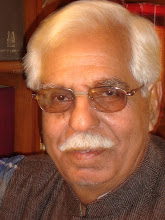
-Baldev Raj Dawar, Oct., 2013
______________
posted by Baldev Raj Dawar @ 7:52 PM
0 Comments