Observed View of Life
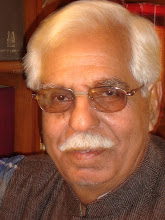
Baldev Raj Dawar
Call it a 'new world view' or an 'observed view of life', here is in nutshell what modern science has to say about life:
1. All living beings grow out of their parents. Nobody 'comes' from nowhere. No living being has ever been seen descending from heaven, materializing out of nothing or getting assembled direct from inanimate matter. It is always parents who make copies of themselves and nurture their children.
2. This observation leads us to believe that life is not something that gets injected at one's birth and ejected at one's death. Life is a baton that is passed on from one generation to the next.
3. There is a common belief that we, the living beings, when born, 'come' into this world and when dead 'leave' this world behind, permanently or temporarily. 'Come' and 'go" are popular memes in most human cultures. These fanciful flights of imagination are, no doubt, amusing but they lack hard evidence. They are indeed false. These 'come' and 'go' memes are not only false they are highly subversive of family, society and humanity. They lead us to believe that our parents are not our real parents, our children are not our real children and our siblings are not our real siblings. According to this view our world is not a real world and therefore not to be taken seriously, to say the least.
4. The geological and fossil evidence gleaned by the modern science leads us to believe that different races of human species are descendants from common ancestors. Different species of apes including humans are descendants from common ancestors. All classes of animals are descendants from common ancestors. All animals, birds, fishes, insects and plants have had common ancestors. The entire life system flourishing on our earth is a single tree and has had a common single origin. This view is further supported by a living evidence: the language of genes in all living cells - be it those of lofty humans or of lowly grass – is the same.
5. Where did the first living cell come from? Was it uniquely and accidentally assembled in the temperate waters of our Earth or was its emergence an ordinary and natural phenomenon that can occur any where in the vast universe including space? The search for the answer is on. The jury is out. There is no definitive answer or a consensus among scientists. There is, however, a slight tilt in favour of the first hypothesis that says: life has had a terrestrial origin. In the beginning life was very simple but over billions of years it proliferated and evolved into more complex and varied forms under the influence of Earth's changing environment.
6. What about man? Yes, man's brain size is comparatively larger than that of other apes. His biped and upright posture frees his hands and enables his eyes to have a comparatively wider view. These qualities helped him, in his wildlife days, to ward off his predators, defeat his competitors and survive many natural odds. His facility with making tools, his innate ability to speak language, his acquired ability to write and read and his science and technology are the things that enables man today to manipulate his environment, dominate the animal kingdom, appropriate disproportionately the Earth's resources to his species benefit and to grow in numbers. Evolution of man is a wonderful and awesome saga. But given his long evolutionary past the secrets of man's powers are understandable. There is nothing mysterious, supernatural or divine about it. Man is an animal, an ordinary member of animal kingdom.
7. An individual's destiny independent of his fellow beings is a myth. So is the destiny of us humans independent of Earth's life. The destiny of all life is in turn bound to the destiny of planet Earth.
8. Life is not eternal. It will cease when the Earth, like Venus, becomes uninhabitable. The Earth, in any case, is going to die in about three-four billion years' time when it will be engulfed by the expanding Sun.
9. Given man's science and technology and the rate at which these are growing, it is possible that life on the Earth may outlive the Earth's demise. We may timely migrate to another foothold, say, Mars or Titan.
10. In the meanwhile, let us stand up and salute:
our parents,
our ancestors,
Our species,
man's science and technology and above all
life's insatiable greed to proliferate and be immortal and
its indomitable spirit to fight all odds,
------------------
June 28, 2010